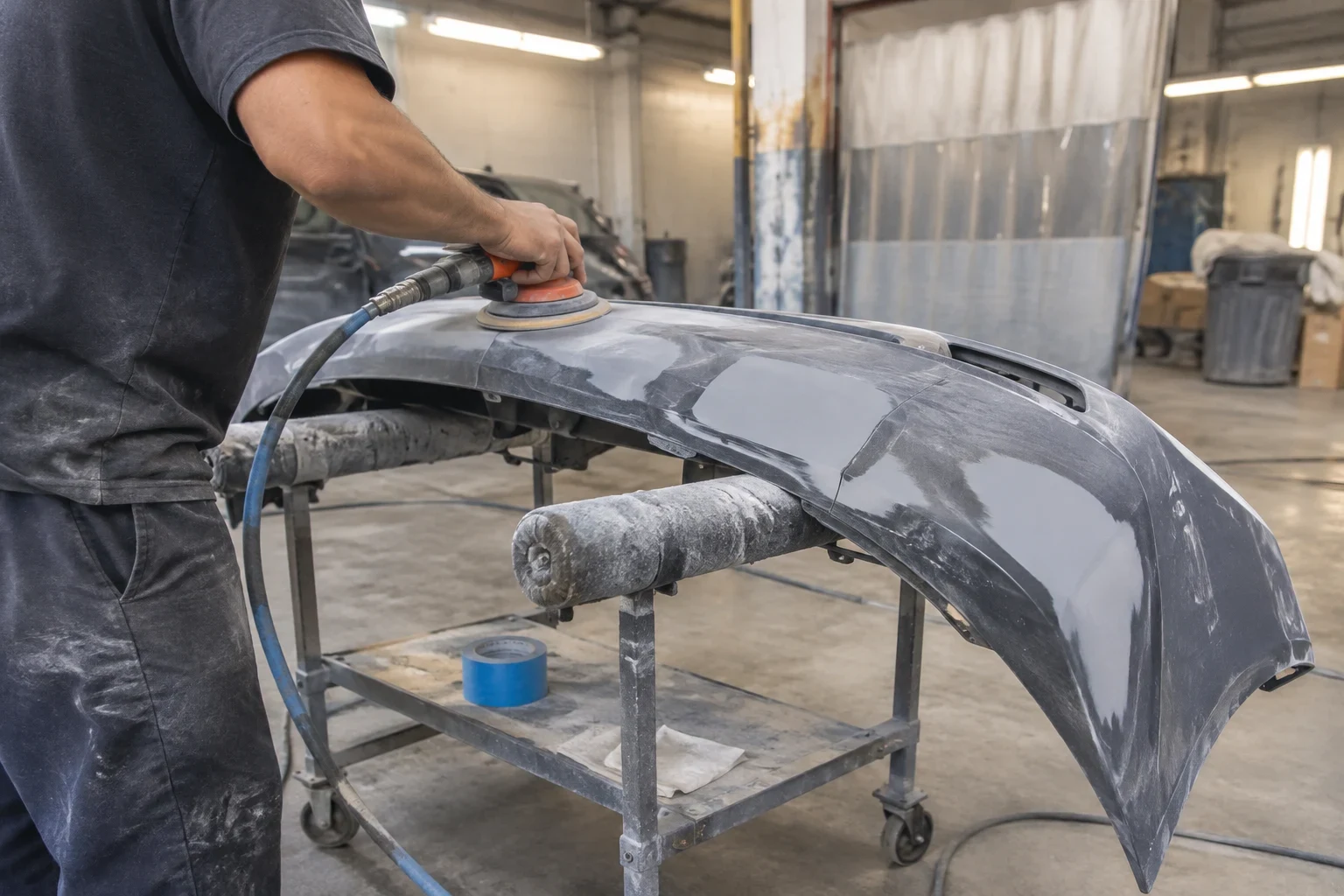
ServicesBumper Repair
Bumper Repair in Parlier
A scuffed bumper cover can hide a crushed foam absorber, a bent reinforcement bar or a knocked-out sensor bracket. We take the cover off when the damage calls for it, show you what we find, and then explain whether a repair or a replacement makes sense.
What bumper repair covers
Modern bumpers are a system, not a single part. The painted cover you see is usually a thermoplastic such as TPO or a polypropylene blend. Behind it sits an energy absorber made of foam or molded plastic, then a steel or aluminum reinforcement bar bolted to the frame rails. Clips, brackets and retainers hold the cover in line with the fenders, headlights and grille.
A low-speed hit in a parking lot can tear a mounting tab or compress the absorber without leaving more than a scrape on the outside. That is why we start with an inspection instead of a price based on a quick look. If the cover is cracked but sound, plastic welding and refinishing is often the right call. If the absorber, bar or brackets took the impact, those parts have to be addressed so the bumper protects your car the way it was designed to.
When the hit went deeper than the bumper, we will tell you, and the work may move into collision repair or frame straightening.
What the work includes
Cover removal and inspection
We remove the bumper cover when the damage suggests hidden problems. That lets us check the absorber, reinforcement bar, mounting brackets and any wiring behind it. You get a plain explanation of what we found before any work is approved.
Plastic welding and crack repair
Cracks and torn tabs in thermoplastic covers can often be welded from the back with matching filler rod, then reinforced. A weld that fuses the plastic holds up better than adhesive alone on a part that flexes.
Reshaping pushed-in covers
Many plastic covers can be heated and worked back into shape when the material has stretched but not split. We only reshape a cover when the plastic still has its strength.
Absorber, bar and bracket replacement
Crushed foam absorbers do not spring back the way they look like they do, and a bent reinforcement bar has lost some of its ability to manage the next impact. We replace these parts when they are damaged rather than hiding them behind a fresh cover.
Prep and refinish
Raw plastic needs an adhesion promoter before primer, and the paint gets a flex additive so it does not crack when the bumper flexes. Color is matched to the rest of your car and blended where needed. Our paint and refinishing page explains that side in more detail.
Sensor and fit check
Parking sensors, blind spot radar and some cruise control radar units mount in or behind the bumper. We check that they are reinstalled correctly and tell you if the hit points to a calibration need. Panel gaps to the fenders and lights are set before you pick up your vehicle.
Signs your bumper needs attention
- Gaps that were not there before
- A cover sitting low at one corner or pulled away from the fender usually means a broken clip, a torn tab or a bent bracket. Left alone, the loose edge can catch air at highway speed and pull further.
- Cracks in the paint or plastic
- Spider cracks in the paint often mean the plastic underneath flexed past its limit. A visible split can grow with every bump and every hot afternoon.
- A dent that looks shallow
- A pushed-in area can mean the absorber behind it is crushed. The cover may look almost fine while the part meant to soak up the next hit is already used up.
- Sensor warnings after a bump
- A parking sensor that beeps constantly or a blind spot light that stays on after a minor hit points to a sensor knocked out of position or a damaged connector.
- Rattles or a loose feel
- Pushing on the bumper and feeling it move, or hearing it buzz over rough road, means something behind the cover has let go.
How a bumper job runs at our shop
- 1
Walk around the damage together
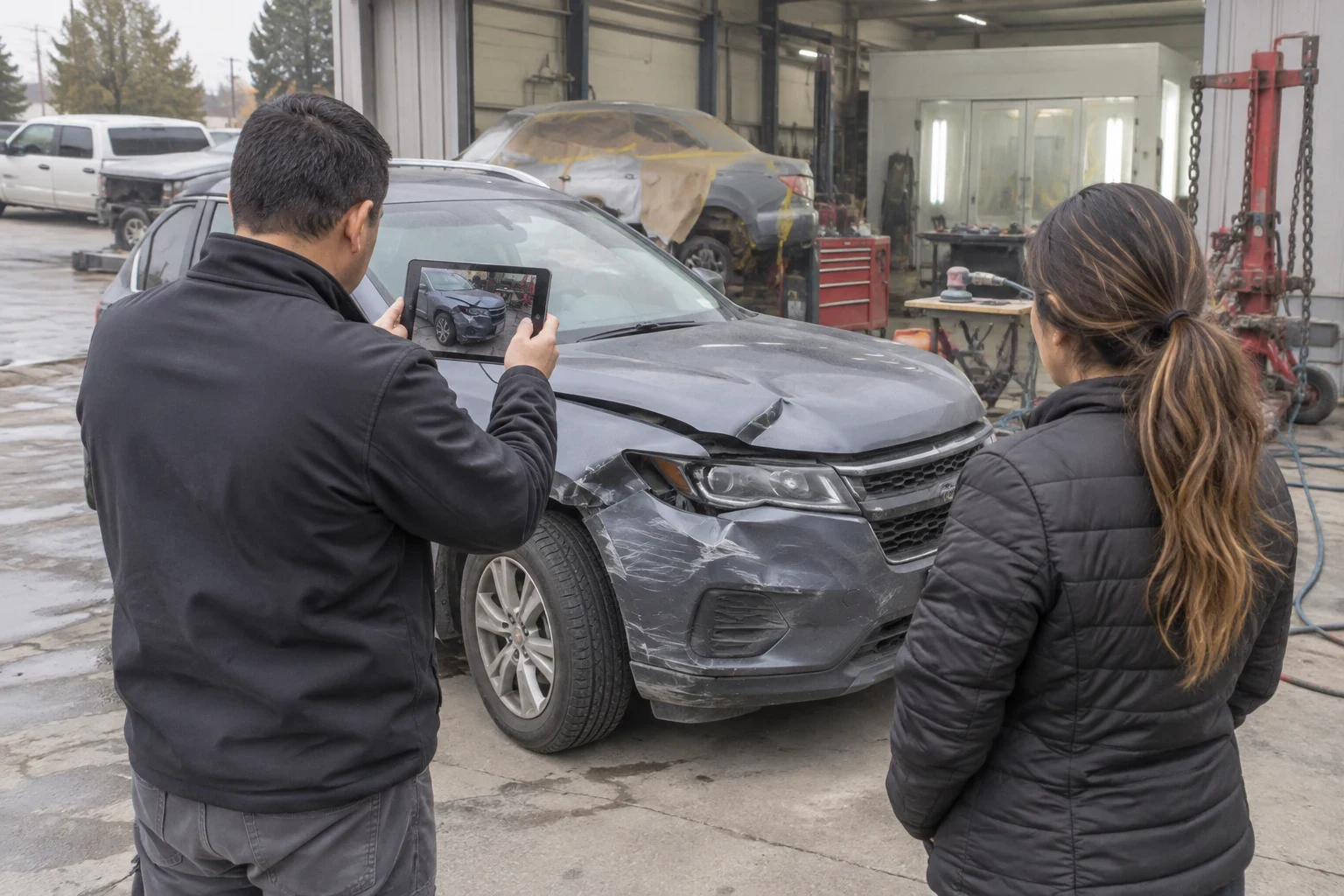
You bring your car to the shop and we go over the damage with you. We note the cover, the fit to nearby panels and any warning lights on the dash.
- 2
Inspect behind the cover
If the damage calls for it, we remove the cover and check the absorber, reinforcement bar, brackets and sensors. We take photos so you can see what we saw.
- 3
Explain the options
You get a written estimate that lists each part and each labor step. We tell you plainly whether the cover can be repaired or should be replaced, and why. If you are filing an insurance claim, our insurance claims page covers how we work with the adjuster.
- 4
Repair, refinish and reassemble
We weld or replace parts, prep and paint the cover, then reinstall it with new clips where the old ones broke. Sensors are reconnected and tested.
- 5
Final check and pickup
We look over fit, finish and color in daylight before you come back. You get your vehicle washed and ready to drive.
What moves the price of bumper repair
Two bumpers with the same scrape can lead to very different estimates. The price depends on what we find behind the cover and on how much your particular car packs into the bumper. We itemize every part and labor step so you can see where the cost comes from.
- Repair versus a new cover
- A crack or tear that can be welded usually costs less than a new cover. Severe tears, missing pieces or plastic that has gone brittle make replacement the better value.
- Hidden parts behind the cover
- A crushed absorber, bent reinforcement bar or broken brackets add parts and labor. These only show up once the cover is off.
- Sensors and electronics
- Bumpers with parking sensors, radar units or camera mounts take more time to remove and reinstall. Some sensors need a calibration after the work.
- Paint and color matching
- Tri-coat pearls and metallics take more material and more steps than solid colors. Blending into the fenders for an even match also adds time.
Bumper repair questions
- Can my cracked bumper be repaired, or does it have to be replaced?
- Many cracks in thermoplastic covers can be welded and refinished. Replacement makes more sense when the plastic is torn through in several places, pieces are missing, or mounting tabs are broken in ways that will not hold. We look at the actual damage and tell you which applies to your car.
- Why do you take the bumper cover off for a small hit?
- The cover is designed to hide the parts that do the work. A small scrape can come with a crushed absorber or a cracked bracket, and those affect how the bumper performs in the next impact. Taking it off is the only honest way to know.
- Will the repaired bumper be the same color as the fenders next to it?
- Every vehicle carries a paint code, and we mix to that code first. Then we tint the mix to account for how your factory finish has faded over the years. Where a hard line would show at the seam, we blend color into the neighboring panels. A flex additive keeps the finish from cracking on a part that bends.
- My parking sensors stopped working after the hit. Is that part of the repair?
- Yes. Sensors and their brackets are part of the bumper assembly, so we check them once the cover is off and include any damaged ones in the estimate. If radar or camera units need recalibration after the work, we will tell you before the repair starts.
- Does a bumper repair go through insurance?
- It can, depending on your policy and who was at fault. Many bumper jobs fall close to a typical deductible, so it is worth seeing the itemized estimate before deciding. Our insurance claims page explains how we work with your insurer if you file.
Get a clear answer on your bumper
Bring your car in and we will check the cover and what is behind it, then walk you through repair or replacement. Drivers come to us from Parlier, Selma, Reedley and nearby towns.