ServicesPaint and Refinishing
Paint and Refinishing in Parlier
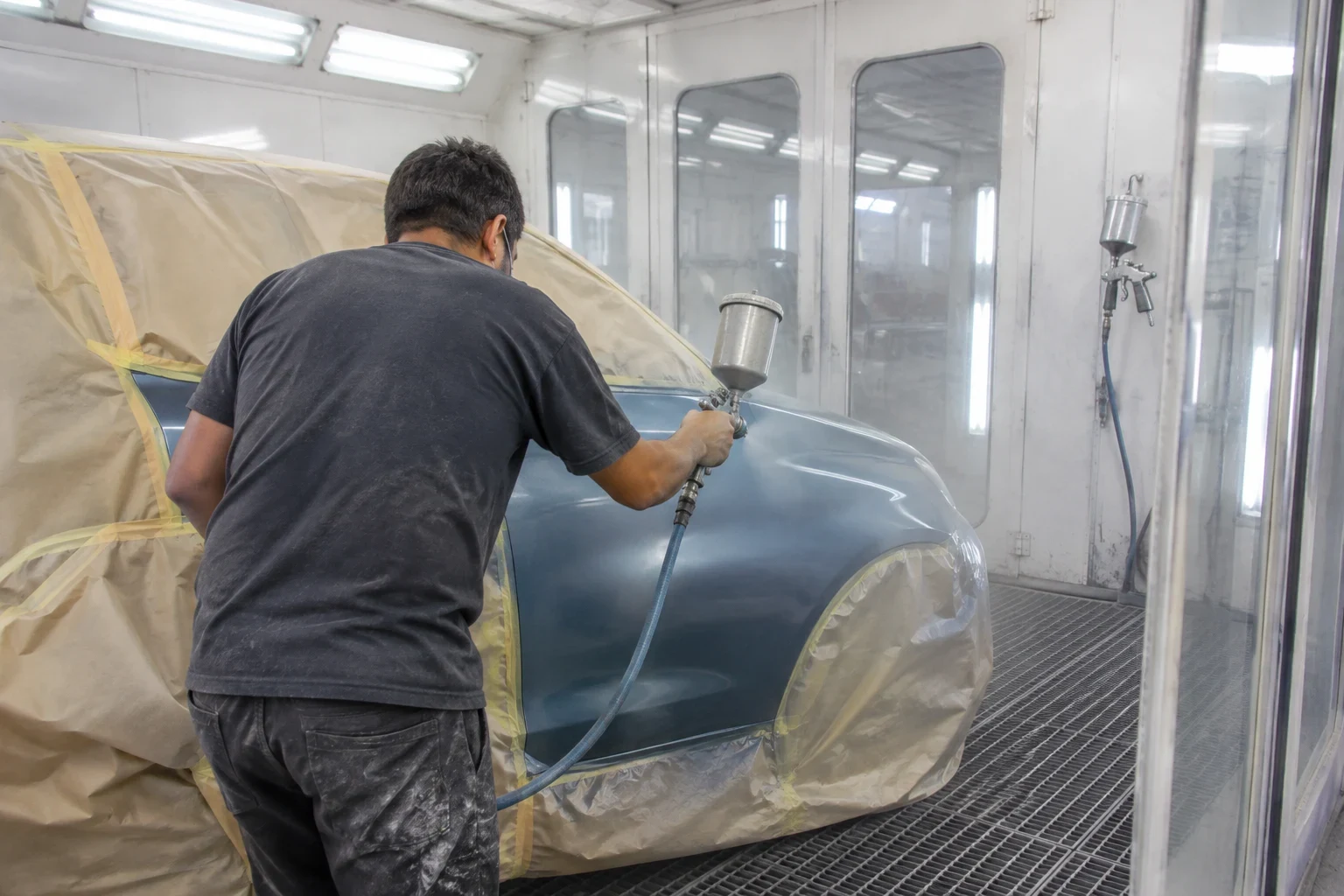
We refinish damaged, faded and peeling paint so the repaired area matches the rest of your vehicle in color, texture and gloss. Before we recommend anything, we check film thickness, read your paint code and show you exactly what we found.
What paint and refinishing covers
Automotive paint is a layered system. Over bare metal or plastic sits primer, then a thin basecoat that carries the color, then a urethane clear coat that takes the sun, the scratches and the bird droppings. Most paint problems start in that clear layer. Once it oxidizes, cracks or lifts, the color underneath fades fast and moisture can reach the metal.
Refinishing means taking a panel back to a sound layer, rebuilding what was lost and spraying new base and clear that match the surrounding panels. Sometimes that is one fender. Sometimes it is a hood and roof that have lost their clear to years of Central Valley summers. We start by inspecting the whole car so you know which panels actually need paint and which only need correction.
If the paint damage came with a dent, a cracked bumper cover or a hit hard enough to shift panel gaps, we handle that work first through dent repair, bumper repair or collision repair, then refinish.
What the work includes
- Film thickness readings
- We measure the existing paint with a gauge on the damaged panel and its neighbors. Readings tell us whether the car has been repainted before and how much clear is left to sand. That decides whether a panel can be corrected or must be refinished.
- Color matching from the paint code
- We pull the code from the door jamb or trunk tag, then compare variant chips and spray-out cards against your car in daylight. Factory colors vary from batch to batch, so the code alone is only a starting point.
- Surface prep down to a sound layer
- Peeling clear and failed paint are sanded off until we reach material that is still firmly attached. Bare steel gets an epoxy primer to seal it against corrosion, and filler work is block-sanded flat before primer surfacer goes on.
- Blending into adjacent panels
- To avoid a visible line at the panel edge, we fade the new basecoat into the next panel and clear the full surface. It is the main reason a repaired door does not look different from the fender beside it.
- Plastic parts done correctly
- Bumper covers and mirror housings need an adhesion promoter and a flexible clear, or the paint will crack the first time the part flexes.
- Cut, polish and final check
- After curing, we color-sand any dust nibs or texture differences, then polish to match the factory gloss and inspect the finish under color-correct lighting before you pick up your car.
Signs your paint needs refinishing
Clear coat peeling or flaking
Whitish, cloudy patches on the hood, roof or trunk lid mean the clear has lost adhesion. It cannot be polished back. The loose layer has to come off and be resprayed.
Chalky, faded color
Red and dark blue cars show this first. If a polish pad turns the color of your paint, the pigment itself is oxidizing and the protective clear is gone or nearly gone.
Scratches that catch a fingernail
A scratch you can feel has cut through the clear into the basecoat or primer. Polishing will not remove it without thinning the surrounding finish too far.
Bubbles or rust spots under the paint
Blisters usually mean corrosion is spreading under the film from a chip or seam. The rust has to be ground out to clean metal and sealed, or it returns through the new paint.
A previous repair that no longer matches
Mismatched color, a visible edge or texture that looks like orange peel next to smooth factory paint are signs of a poor earlier refinish that can be corrected.
How a paint job runs at our shop
- 1
Inspection and findings
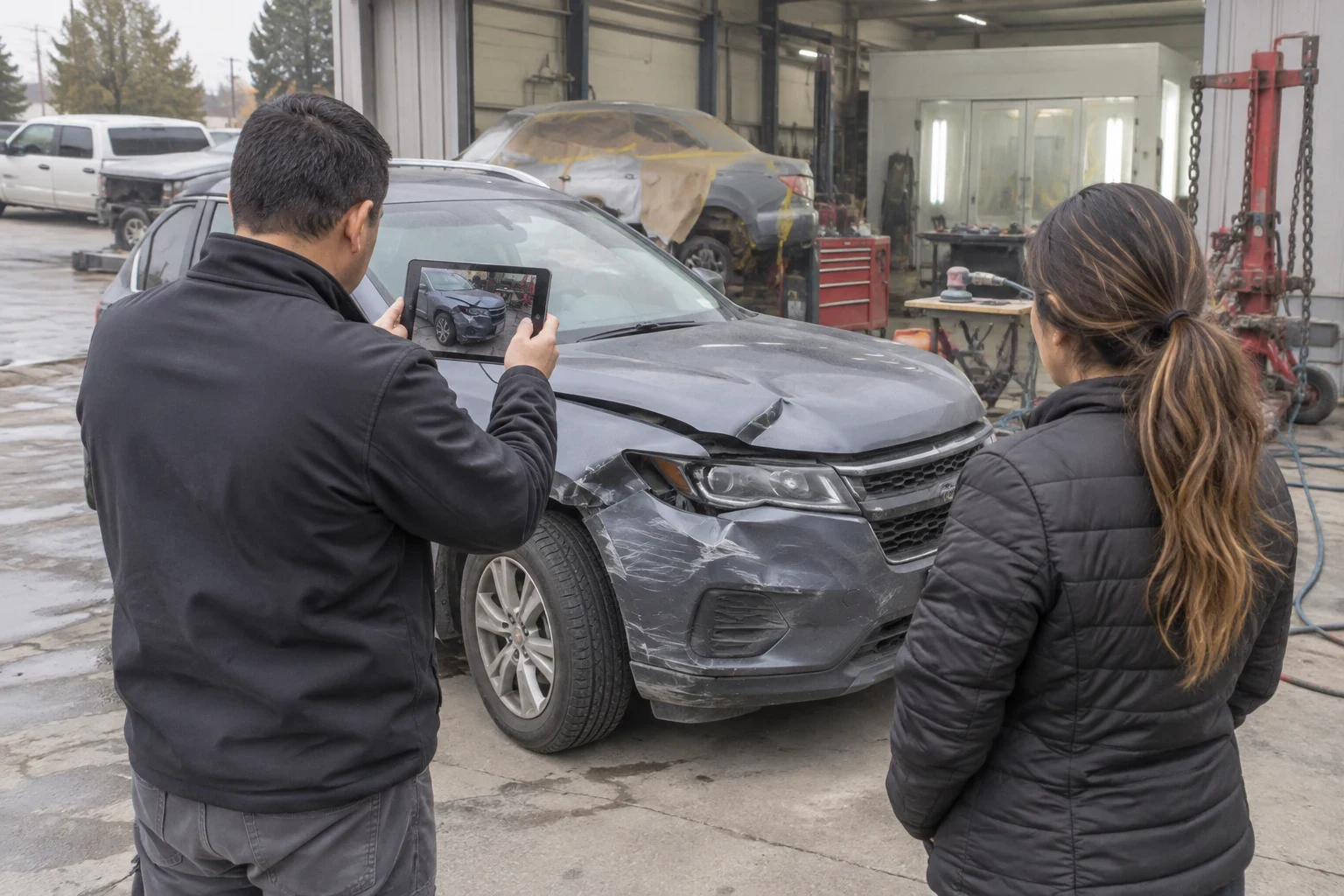
You bring your vehicle in and we look at it in good light, take thickness readings and photograph what we see. We explain which panels need paint, which can be corrected, and why.
- 2
Written estimate
The estimate lists each panel, the blend panels and any prep such as rust repair or filler. You know what is being painted before work begins.
- 3
Disassembly and prep
Moldings, emblems, handles and lights come off instead of being taped around, so paint edges stay clean and do not peel later. Panels are sanded, primed and masked.
- 4
Spraying and curing
Basecoat and clear go on in a controlled spray environment with proper flash time between coats. The clear is cured before anything is reassembled.
- 5
Finish and delivery
Parts go back on, the finish is polished and checked, and we walk you around your car to show the repaired areas.
What moves the cost of refinishing
Paint cost is mostly labor and material, and both change with how much surface is involved and what condition it is in underneath. We price from the inspection, not from a guess over the phone. The estimate breaks out each panel so you can see where the cost comes from.
- Number of panels and blends
- Every damaged panel usually means at least one neighboring panel to blend. A single scratched door can involve three panels of clear.
- Type of color
- Solid colors are the simplest. Metallics need careful blending to control flake orientation, and tri-coat pearls add a separate mid-coat layer and more test panels.
- Condition under the paint
- Rust, old filler or a thick previous repaint all add prep time. Thickness readings tell us this before we quote.
- Parts removal
- Cars with many trim pieces, sensors or clips take longer to disassemble and reassemble correctly.
Paint and refinishing questions
Something not covered here? (559) 987-4445
How close will the new color be to my original paint?
Close enough that the eye should not find the repair. We start from the paint code, spray variant colors onto test cards and hold them against your actual panels in daylight, then blend into the neighboring panel so there is no hard edge. If your paint has faded, we match how it looks today, not how it looked when the car was new.
Can you just touch up the peeling clear coat?
Not reliably. Lifting clear has already lost its grip on the basecoat, and the edge of the failure keeps creeping outward under any touch-up. The panel has to be sanded back to paint that is still firmly bonded, then cleared again.
Do I need to repaint the whole car?
Usually not. Most cars need only the panels with failed or damaged paint, plus the blend panels next to them. If many panels show clear coat failure, we will tell you that plainly and let you decide how far to go.
How many days will the paint work take?
It depends on how many panels are involved, how much prep the surface needs and how long each coat has to cure. One scratched door moves through faster than a hood, roof and trunk that also need rust repair. After we inspect your vehicle, the estimate comes with a realistic timeline.
How should I care for fresh paint?
Hand wash with mild soap and skip automatic car washes for the first few weeks. Hold off on wax or sealant until the finish has fully cured. We will give you the timing when you pick up your car.
Will insurance pay for paint work?
If the paint damage came from a covered loss such as a collision or vandalism, it is usually part of the claim. Fading from age generally is not. Our Insurance Claims page explains how we work with your insurer on the estimate.
Get an honest read on your paint
Bring your car in and we will measure the finish, show you what we found and explain what it will take. Start with a phone call.