ServicesInsurance Claims
Insurance Claim Repairs in Parlier
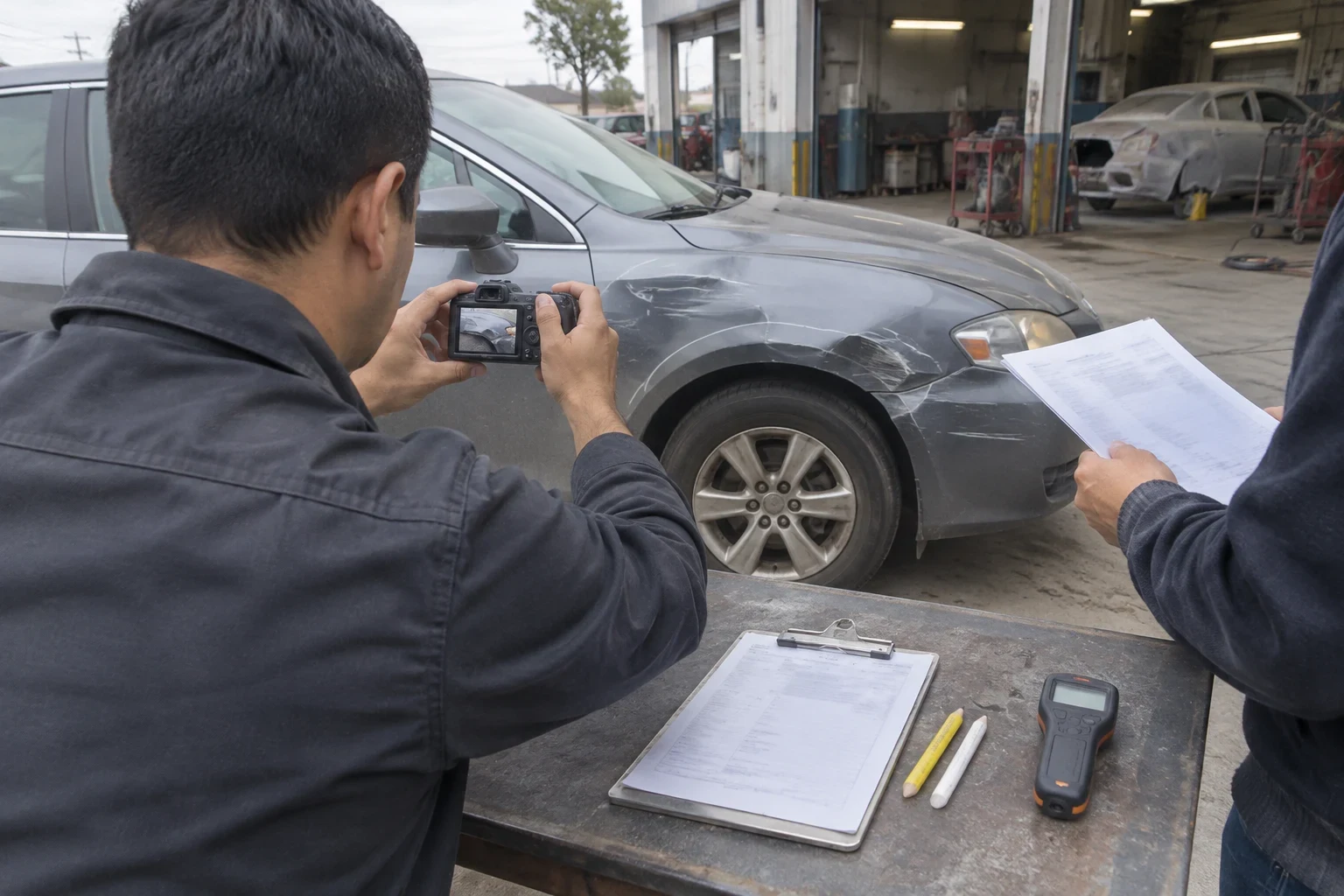
When an insurance claim pays for the repair, the estimate has to match the damage that is actually on your car. We take the damaged panels apart, photograph what we find and write it up line by line, so the adjuster and you see the same facts.
How we handle repairs paid by insurance
Most first estimates are written from the outside of the car. An adjuster looks at a crushed bumper cover and a scuffed fender, writes those up, and moves on. What the walk-around cannot show is the cracked absorber foam behind the cover, the bent reinforcement bar, the broken headlamp mounting tab or the radiator support that shifted a few millimeters.
Our work starts with a careful inspection. We remove the damaged parts, measure where it matters and photograph every item before we recommend anything. If the insurer's estimate misses something, we send a supplement with photos and part numbers. If it covers everything, we say so plainly.
We are not your adjuster and we do not decide what your policy pays. Our job is to repair your car correctly and to give the insurance company clear, documented reasons for each operation on the estimate.
What our claim work includes
Teardown inspection
We remove the bumper cover, lamps and inner liners on the damaged side to see what the impact reached. Hidden damage is far easier to get approved before the repair starts than halfway through.
Photo documentation
Each damaged part is photographed in place and after removal, with close-ups of cracks, kinks and broken tabs. Those photos go to the insurer with the estimate, and you can see them too.
Line-item estimate
The estimate lists each part, labor operation, refinish step and material separately. You will know why a panel is being replaced instead of repaired, and why blending the next panel over is needed for the color to match.
Supplements to the insurer
When teardown reveals damage that was not on the original estimate, we write a supplement and send it to the adjuster along with supporting photos. We call you when it goes out and again once the insurer decides.
Parts sourcing explained
Policies differ on OEM, aftermarket and used parts. We tell you which type the estimate calls for and point out any part where fit or safety makes that choice worth questioning.
Signs your claim needs a closer look
The estimate came from photos only
Photo-based estimates rarely include damage behind the bumper cover or inside the wheel well. A teardown usually adds lines.
Panel gaps look uneven
A hood or door that no longer lines up evenly with the fender often means a structural part moved. That can point to work covered on our Frame Straightening page.
Warning lights after the impact
Front and rear sensors for parking aids, blind-spot monitoring and adaptive cruise sit right behind the bumper. A light on the dash after a minor hit means a sensor or its bracket needs checking.
The car pulls or the steering wheel is off center
A curb strike or side impact can bend a control arm or tie rod. Suspension damage belongs on the claim, not discovered months later.
You were told the paint will just be touched up
Modern basecoat and clearcoat finishes need proper blending into adjacent panels to match. A spot touch-up on a metallic color usually shows.
From first call to final invoice
- 1
A phone conversation first
Tell us what happened, plus your claim number and insurance company if you already have them. We pick a day that works for your car to come in for its inspection.
- 2
Inspection and teardown
We look over the whole car, then remove damaged parts to see what is underneath. Every finding is photographed and noted.
- 3
Estimate and approval
We write the estimate, compare it with the insurer's and send any supplement with documentation. Repairs start once the insurer approves the work and you agree to it.
- 4
Repair and refinish
Structural and panel work comes first, then primer, color and clearcoat. Sensors and lamps are reinstalled and checked before the car leaves the booth area.
- 5
Final walk-through
You look over the car with us, review the final invoice against the approved estimate and pay your deductible if your claim has one.
What decides your out-of-pocket cost
On a covered claim, your share usually comes down to your deductible and what your policy says about parts and coverage. The total repair cost is driven by the damage itself. Here is what moves both.
- Whose policy pays
- If the other driver was at fault, their liability coverage may pay with no deductible to you. If you file under your own collision coverage, your deductible applies.
- Your deductible
- The deductible is paid to the shop when you pick up your car. The insurer pays the remainder of the approved repair.
- Hidden damage found at teardown
- Bent brackets, crushed absorbers and damaged sensors raise the total repair cost. Documented supplements are how those items get added to what the insurer pays.
- Parts type in your policy
- Some policies specify aftermarket or used parts. Asking for new OEM parts where the policy calls for something else can leave a difference for you to cover, and we will tell you before ordering.
- Rental coverage
- Rental reimbursement depends on your policy. Check with your insurer, since repair time grows if supplements need approval.
Answers about repairs paid by insurance
Something not covered here? (559) 987-4445
Can I pick my own body shop, or does my insurer choose?
You pick. Under California law, the decision about where your car gets repaired belongs to you, not the insurance company. An insurer may point you toward shops in its network, but that is a suggestion. Let your adjuster know you chose us, and we will coordinate with them from there.
What happens if the insurer's estimate is lower than yours?
It happens often, because most first estimates are written before a single part comes off the car. We write a supplement covering each added item and attach photos of it. The insurer then approves or questions individual lines, and we keep you posted on the outcome.
Should I file the claim before bringing my car in?
Usually yes, because filing gets you a claim number and an assigned adjuster. If you have not filed yet, we can still inspect your car. What we find can help you describe the damage accurately when you report it.
Who do I pay, and when?
Any deductible on your claim is paid to us at pickup. The insurer pays the approved amount, often straight to the shop. Work outside the claim, such as an unrelated repair you ask for, is explained and approved by you before we do it.
Will you put aftermarket parts on my car?
We use the parts type your policy and the approved estimate specify. If an aftermarket or used part fits poorly or interferes with a sensor or safety system, we document the problem and take it up with the insurer rather than installing it.
Bring the claim, we'll bring the findings
Have your claim number handy if you have one and tell us what happened. We will set a time to inspect your car and explain what we find before any work begins.