ServicesFrame Straightening
Frame Straightening in Parlier, CA
When a collision shifts the structure of your car, new panels and paint cannot fix it. We measure your vehicle against the manufacturer's dimensions and show you which points are out and by how much. Then we pull the frame or unibody back to spec before any cosmetic work begins.
What frame straightening fixes, and when it is the right call
Most cars and many SUVs built in the last few decades use a unibody, where the floor pan, rails, rocker panels and strut towers form one welded shell. A hard hit can push a front rail back, kink an inner apron or twist the shell by a few millimeters. You may not see it from outside, but the suspension mounts move with the metal, so the wheels no longer sit where the engineers put them.
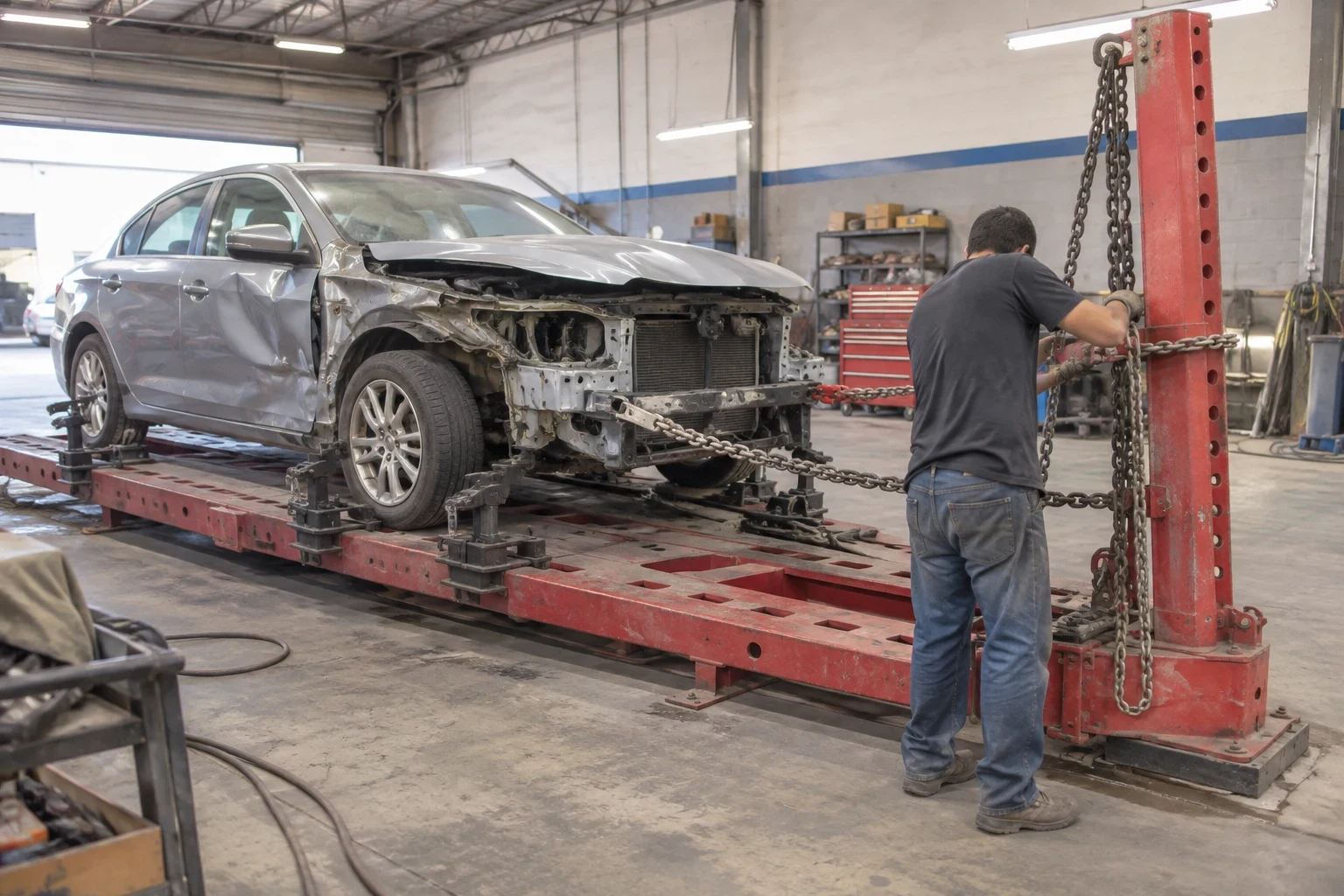
Frame straightening uses a frame machine to anchor the vehicle and apply controlled pulls opposite the direction of the impact. We measure as we go until each reference point is back within the manufacturer's tolerance. Body-on-frame trucks get the same approach on their ladder frame.
It is the right call when the measurements show the structure moved but the metal can still be restored. When a rail is torn, cracked or crushed beyond what the manufacturer allows to be pulled, we tell you that plainly and explain the sectioning or replacement the repair procedure calls for instead.
What the work includes
- Three-dimensional measurement
- We check length, width and height at the manufacturer's published reference points, usually holes and bolt locations on the underbody. Every reading is recorded before the first pull, so you see the starting point instead of just hearing about it.
- Anchoring at the pinch welds
- The vehicle is clamped to the bench at its rocker pinch welds or frame mounts so it cannot shift. Without a solid anchor, a pull moves the whole car instead of the damaged section.
- Controlled pulls
- Chains and towers pull in measured stages, often from more than one direction at once to reverse the path of the impact. Many modern high-strength steels should not be heated, so we follow the repair procedure for your vehicle on whether heat is allowed at all.
- Structural parts replaced where required
- Parts designed to crush, such as bumper reinforcements and the crush cans at the front of the rails, are replaced, not straightened. Where the manufacturer allows a rail to be sectioned, we cut and weld only at the specified locations.
- Post-repair checks
- After the final measurement we check suspension mounting points, hood and door gaps, and wheel alignment. If your vehicle has radar or camera driver-assist systems, we tell you which ones need calibration after structural work.
Signs your car may need frame straightening
It still pulls after an alignment
If an alignment shop cannot bring camber or setback into range after an accident, the suspension mounts themselves may have moved. That is a structural problem, not an adjustment.
Gaps wider on one side
Uneven gaps between the hood and fenders, or a door that now needs a slam to latch, often mean the opening around it has shifted.
One-sided tire wear
Wear on one edge of a tire that shows up within a few thousand miles of a collision points to a wheel that is no longer square to the car.
Wrinkles underneath
Creases in the floor pan, a ripple in a rail or cracked seam sealer at a strut tower mean the energy of the hit went into the structure.
New creaks over bumps
Pops and creaks from the body over dips can come from a shell flexing at a damaged joint.
How a frame repair runs at our shop
- 1
Inspection and baseline measurement
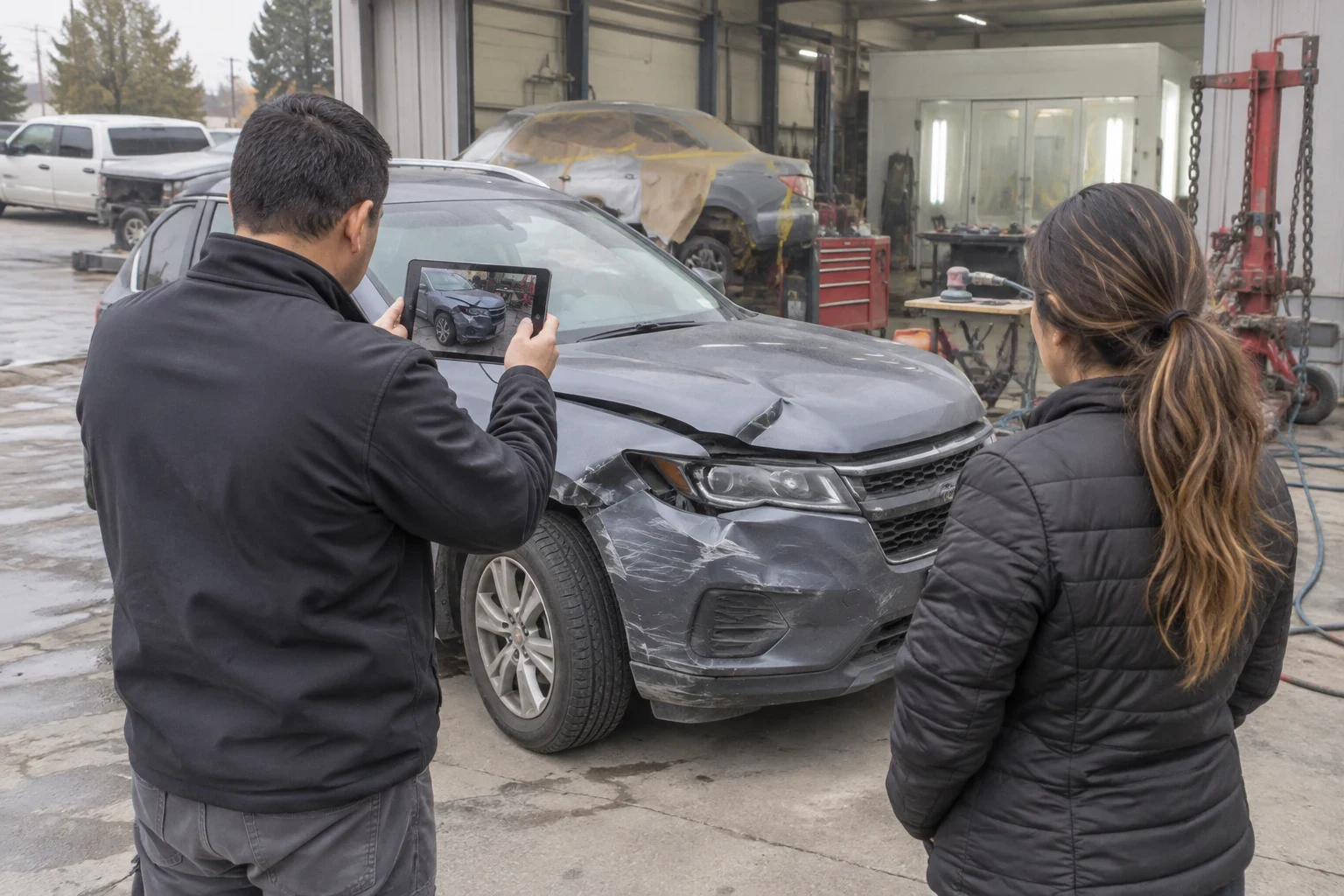
Your car goes up on the lift and onto the measuring system. We photograph the damage, record each reference point and walk you through which points are out of tolerance and why.
- 2
A written plan before any pulling
You get the estimate broken down by measurement, pulls, parts and labor. If something only shows up once trim and the bumper cover are off, we stop, document it and talk with you before adding it.
- 3
Pulling to spec
Pulls go in stages with a measurement after each one. Steel has spring-back, so we pull slightly past the target, relax it and check again until the point holds.
- 4
Final readings
When every point is within tolerance, we record a final set of measurements you can compare against the starting numbers.
- 5
Body, paint and alignment
With the structure correct, your car moves on to panel work and paint and refinishing, then a four-wheel alignment and a road test.
What drives the cost of frame straightening
There is no flat rate for structural work, because two impacts that look alike from outside can hide very different damage underneath. We price the repair after measuring. The estimate lists each line so you know what you are paying for.
- How far and how many points moved
- A single rail pushed back a few millimeters takes fewer pulls than a shell twisted corner to corner. More set-ups on the bench mean more labor hours.
- Steel type and repair rules
- Ultra-high-strength steel and aluminum structures often cannot be pulled or heated. A part that could be straightened on an older car may have to be sectioned or replaced on a newer one.
- Parts behind the damage
- Crushed reinforcements, radiator supports, engine mounts and suspension components add parts cost. We list each one separately.
- Calibration and alignment
- Vehicles with front radar or windshield cameras may need calibration once the structure is back in place, and every structural repair finishes with an alignment.
- Whether an insurance claim covers it
- On a covered collision, the insurer pays the agreed repair minus your deductible. Our Insurance Claims page explains how we share measurements and photos with the adjuster.
Frame straightening questions
Something not covered here? (559) 987-4445
Is a car with frame damage ever the same again?
When the structure is measured back within the manufacturer's tolerances, the suspension and panels sit where they were designed to, and the car drives as it should. The key is measurement, not eyeballing. If the damage is beyond what the procedure allows to be repaired, we tell you before work starts.
Will frame damage show up on a vehicle history report?
It can, depending on how the accident and the insurance claim were reported. We have no control over what a report says. What we can give you is the before and after measurement records, which are useful if you sell the car later.
How long does frame straightening take?
The pulling itself often takes hours to a day or two, but the full repair includes parts, body work, paint and alignment. Parts availability usually sets the timeline. Once parts are ordered, we give you an estimated schedule and update you if it changes.
Can you straighten an aluminum or high-strength steel structure?
Some of it, within the limits the manufacturer sets. Aluminum and boron steel parts are often listed as replace-only because pulling or heating them weakens the metal. We check the repair information for your specific model and follow it.
Can I drive my car to your shop?
If the wheels point straight, the lights work and nothing rubs a tire, many cars can be driven in carefully, including the trip from Selma or Reedley. If it pulls hard, leaks fluid or a wheel sits at an angle, have it towed. Describe the damage when you call and we will tell you which is safer.
Find out what the measurements say
Tell us what happened and where your car was hit, and we will set a time to put it on the measuring system. You see the numbers before we recommend anything.