ServicesDent Repair
Dent Repair in Parlier
We look at the dent under shop lights, check the paint for cracks and see what sits behind the panel before we recommend anything. Then you get a plain answer: paintless repair, panel work with refinishing, or a new part, and the reason for it.
Two ways to fix a dent, and how we choose
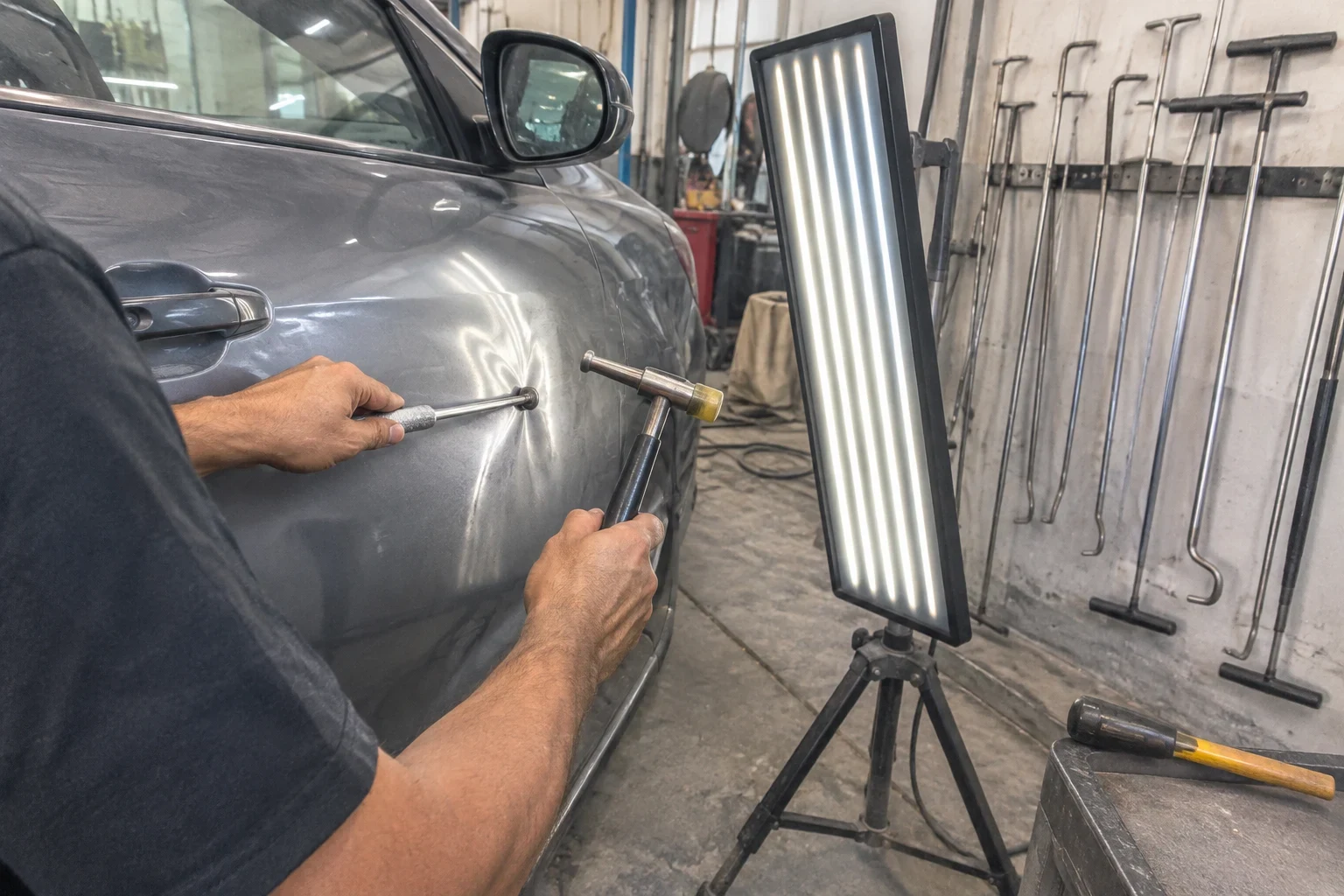
Paintless dent repair, usually called PDR, uses steel rods from behind the panel and glue tabs from the front to work the metal back to the shape it was stamped in. The factory paint stays on the car. That keeps the original finish and avoids any color-match question. It works when the paint is unbroken and the metal has bent without stretching.
Some dents are past that point. If the paint is cracked, the dent sits on a sharp body line or a panel edge, or the impact stretched the steel, rods alone cannot bring it back. Then we do conventional repair: pull the low spot, shrink the stretched metal with heat, apply a thin skim of filler only where needed, and refinish the panel.
Knowing which method fits takes a close look at your car. We show you what we see and explain the choice before any work starts.
What our dent repair covers
Paint and metal check
We read the dent with a reflection board to see its true size and any ripples around it. A paint thickness gauge tells us whether the panel has been repaired or filled before, which changes what method will hold.
Access behind the panel
Reaching the back of a dent often means removing a tail lamp, door trim panel or inner fender liner. We take these off carefully and replace any broken plastic retaining clips so nothing rattles afterward.
Paintless repair
Door dings, small hail dimples and shallow soft dents are pushed out from behind or pulled with glue tabs where bracing blocks the back side, such as along roof rails. The metal is worked in small steps so the paint is not stressed.
Conventional panel work
Steel panels can be pulled with welded studs and shrunk where the metal stretched. Aluminum hoods and fenders get separate tools, since steel particles left on aluminum cause corrosion, and aluminum cracks if it is forced cold.
Refinish when needed
When paint has to go back on, the panel gets primer, a color-matched basecoat and clearcoat, blended into the neighboring panels. That work follows the same standards as our Paint and Refinishing service.
Dents worth having us look at
- A door ding from a parking lot
- Small and round with the paint intact, these are usually good PDR candidates. Left alone, they rarely get worse, but they are easiest to fix while the metal is undisturbed.
- A crease along a body line
- Body lines are stiff, folded metal. A crease there takes more skill to reshape, and it often decides whether paintless repair is possible at all.
- Cracked or chipped paint at the dent
- Once the clearcoat breaks, moisture reaches bare steel and rust starts under the paint. Central Valley summer heat also makes a cracked clearcoat lift and peel faster, so these are better fixed sooner.
- Hail dimples across the roof or hood
- Hail leaves many shallow dents on horizontal panels. Most can be worked out without paint if the finish did not crack.
- A door or panel that no longer lines up
- If a gap changed or a door closes differently, the impact may have reached a hinge pillar or inner structure. That is more than a dent, and our Collision Repair page covers how we handle it.
- An old repair that ripples
- Waves or a sunken ring around a past repair usually mean thick filler that shrank over time. We can strip it and repair the metal properly.
How a dent repair runs at our shop
- 1
Inspection and findings
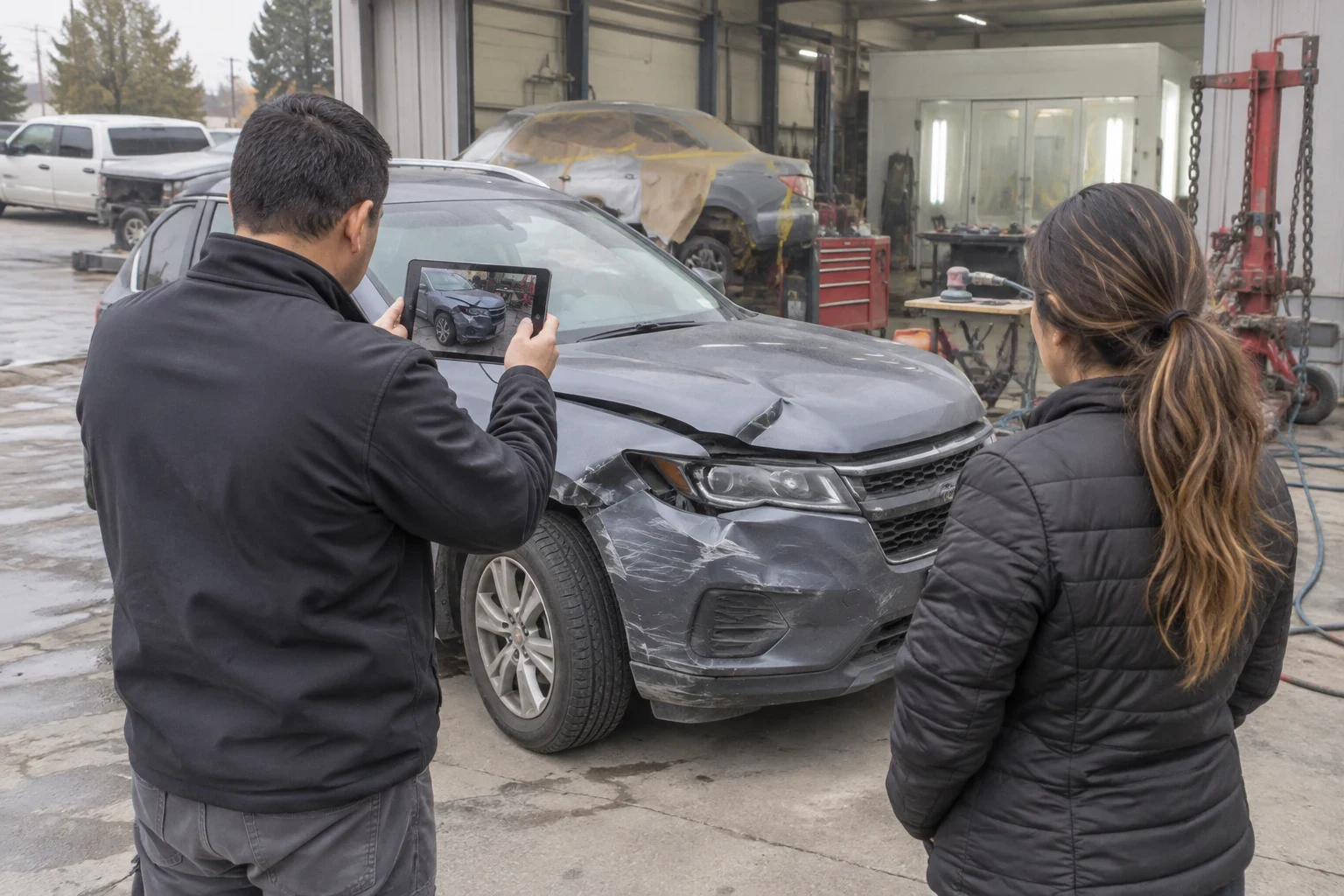
You bring your car in and we look at the dent with you. We check the paint, the metal, any prior repair and what parts must come off for access, then tell you what we found.
- 2
The estimate and the method
You get a written estimate that names the method, any parts or clips, and refinishing if it is needed. If PDR will not give a clean result, we say so instead of trying it anyway.
- 3
The repair
We remove trim and lamps, work the metal, and refinish if the plan calls for it. Removed parts go back on with new clips where the old ones broke.
- 4
Final check and pickup
Before you pick up, the panel goes back under the reflection board so we can catch any low spot or ripple. When you arrive, we stand at the panel with you and point out what was done, so you judge the result with your own eyes.
What moves the cost of dent repair
Two dents of the same size can price very differently. The location, the paint and what it takes to reach the back of the panel matter as much as the dent itself. We give you the estimate after the inspection, with each item listed.
- Size, depth and stretch
- A shallow dent with no stretched metal goes quickly. Deep or sharp dents need more pulls, and stretched steel needs shrinking.
- Location on the panel
- Dents on body lines, panel edges or double-walled areas take more time and sometimes rule out paintless repair.
- Access
- If trim, lamps or liners must come off, that labor is part of the job, plus any clips that need replacing.
- Paint condition
- Intact paint allows PDR. Cracked paint adds primer, color matching, clearcoat and blending into nearby panels.
- Panel material and count
- Aluminum panels need different tools and more care than steel. Many dents, as with hail, are priced across the whole car.
Dent repair questions
- Can every dent be fixed without repainting?
- No. Paintless repair needs unbroken paint and metal that bent without stretching. Sharp creases, cracked paint and dents on panel edges usually need conventional repair and refinishing. We tell you which applies after we see the dent.
- Will the repaired spot show?
- A good PDR repair should not be visible under normal light. With conventional repair, the refinished panel is color-matched and blended into the panels next to it so the transition does not stand out. We check the panel under a reflection board before you pick up.
- Does a small dent cause rust if I leave it?
- If the paint is intact, the steel stays protected and rust is unlikely. If the paint is cracked or chipped, moisture reaches the metal and rust can spread under the paint. That is the main reason to fix damaged-paint dents sooner.
- Will insurance pay for dent repair?
- It depends on your policy and how the dent happened. Hail damage usually falls under comprehensive coverage, and parking lot damage may fall under collision. Your insurer decides coverage, and our Insurance Claims page explains how we work with them and what you can expect.
- How long will you need my car?
- A single door ding fixed with PDR is a short job. Dents that need panel work and refinishing take longer because primer and paint need time to cure between steps. We give you an expected timeline with the estimate.
Bring the dent in and see what we find
We will look at the paint and the metal with you, explain which repair fits, and put the estimate in writing before any work starts.